
Minor Spoilers about Silent Hill 2 plot and mentions of sexual abuse.
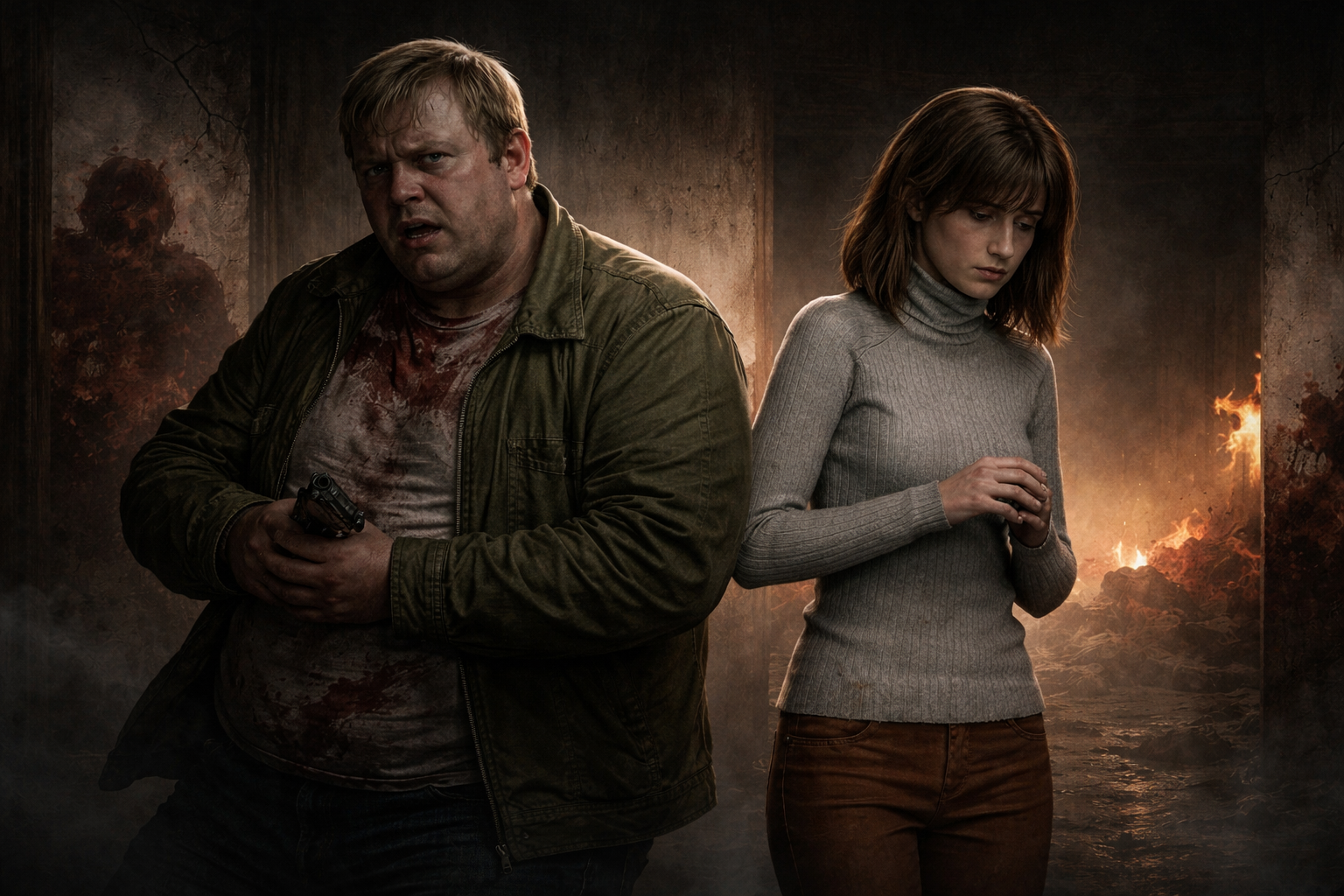
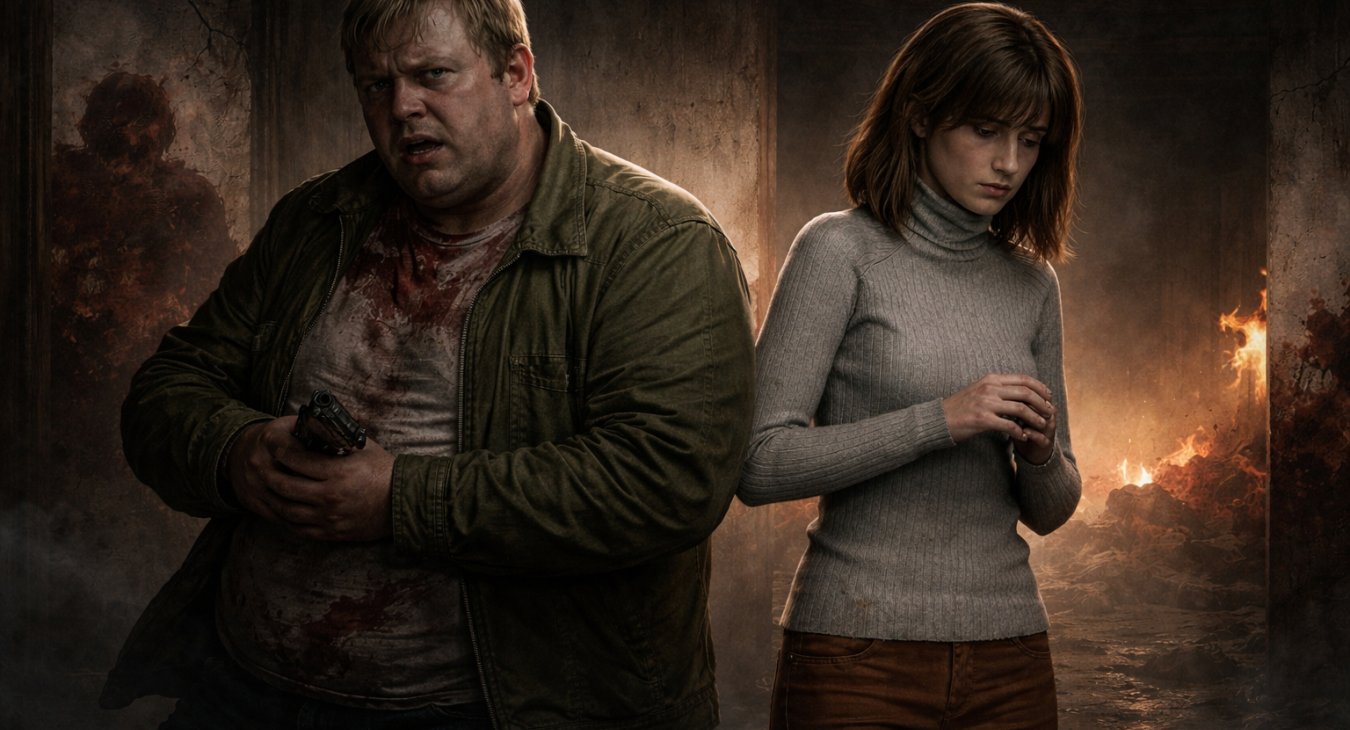
I have stated many times that Silent Hill 2 isn’t just a horror game. It’s a psychological map of how unprocessed trauma shapes our experience of the world. While James Sunderland’s story takes the spotlight, the characters of Angela Orosco and Eddie Dombrowski offer powerful reflections on what it means to live with pain that never found a voice.
Their journeys are tragic and disturbing, not because they face monsters, but because they can’t escape what those monsters represent. In many ways, they never really leave the town. For anyone working through grief, shame, abuse, or anger, especially those who feel trapped by silence and isolation, Angela’s and Eddie’s stories are heartbreakingly familiar.
Angela Orosco: Shame That Burns
Angela’s story is possible the most complex in the history of NPCs (None Playable Characters), and I believe she deserves a lot more attention which I will give to her in another article.
Angela enters Silent Hill looking for her mother, but she’s also fleeing a life marked by sexual abuse and betrayal. Her father and brother abused her. Her mother didn’t protect her. In the absence of support, Angela internalises the blame: "Even Mama said it... I deserved what happened."
Her scenes in the game feel like walking through someone’s private hell. The burning staircase. The monster called "Abstract Daddy." The vacant stare. Angela is drowning inside a shame that keeps looping back on itself. She’s stuck in the belief that what happened to her was her fault. And when you believe that, healing feels impossible.
From a therapist’s lens, Angela represents someone carrying trauma too painful to name, too dangerous to remember. Her pain isolates her. Her voice is quiet. And her resignation is chilling. When she says, "You see it too, don’t you? For me, it’s always like this," it’s as if the fire around her is more real than any hope.
Angela’s story speaks to anyone who has endured abuse. Abusers and their enablers will always make us believe it was our fault, and we believed them. If pain is who you are, how do you imagine anything else?
What makes Angela’s journey especially tragic is her deep longing for connection beneath the despair. Her search for her mother suggests she still craves some form of love or recognition. But every encounter reinforces her belief that she is unwanted and unworthy. The world she moves through is distorted, hostile, and burning. A reflection of how unrelenting trauma reshapes our perception of reality. The fact that she continues to walk through it at all is a sign of endurance, even if she no longer believes in escape.
Angela's behaviour isn’t dramatic or erratic; it’s muted, tired, and detached. That emotional numbness is common in those who have lived with prolonged abuse. It’s a survival strategy, a way of staying alive without feeling the full weight of what’s been endured. But it also leaves her cut off from any potential lifeline.
Eddie Dombrowski: Rage That Consumes
Eddie’s trauma is different but no less devastating. He’s been mocked, bullied and humiliated for years. His was bullied for being overweight. His sensitivity is ridiculed. That hurt festers and turns into rage. He kills a dog. He shoots a man. He doesn’t arrive in Silent Hill looking for answers. He arrives angry and armed.
In Eddie, we see how shame can mutate into violence when there’s no place to put the pain. He doesn’t want to be weak. He wants to be feared. His final confrontation with James is laced with defensiveness: "You think it’s okay to kill people? You need help, James."
But Eddie is not just a villain. He’s a portrait of what happens when someone’s suffering is ignored until it erupts. His loneliness is profound. He doesn’t think anyone sees him as human. His humour is brittle. And like Angela, he’s stuck. Trapped in a story where pain is all there is, and lashing out is the only way to be seen.
Eddie’s arc shows us how anger can become the only emotion left when everything else is shut down. When crying feels unsafe or shameful, rage becomes a mask. But rage without reflection becomes a loop. And like Eddie, you end up hurting yourself just to feel in control.
There’s also a sad irony in Eddie’s downward spiral. He desperately wants to be accepted, but the more he lashes out, the more isolated he becomes. He sees threats everywhere and finds justification for violence in every perceived slight. Silent Hill doesn’t give him peace; it amplifies his fear and loathing until all that remains is rage. His descent shows how untreated emotional wounds can twist a person’s world into a battlefield.
There are moments in Eddie’s arc where you sense he isn’t fully gone, where a part of him still longs for understanding. But he’s drowning in a sea of hostility and ridicule. No one offered him a way to express pain without punishment. No one gave him a language for what he felt. So he speaks through violence.
Silent Hill as a mirror
Silent Hill draws people in who are running from something inside themselves. It doesn’t haunt its visitors. It reflects their internal world. Angela sees a world on fire. Eddie finds a place where violence feels justified. The town shows them what they most fear and what they believe they deserve.
Neither of them gets out. Not because they’re weak, but because they’re alone. There’s no one to hold their story, to help them rewrite it. In real life, that’s what therapy can be, a space where the pain gets witnessed, where the story shifts from "I deserved this" to "I survived this."
Why This Matters for Mental Health
Angela and Eddie stories offer two paths many people walk alone. The path of shame and the path of anger. Both lead to isolation. Both keep you stuck. And both are especially familiar in the lives of those who were taught not to feel, not to speak, not to need.
Silent Hill 2 shows us what happens when pain is buried. But it also hints at something else. What could change if we dared to tell the truth, even in whispers.
There is a path through the fog. It begins when we name what hurt us, when we stop believing we deserved it and when we reach out for something more. Eddie and Angela didn’t have that chance. But you do.
George Papachristodoulou