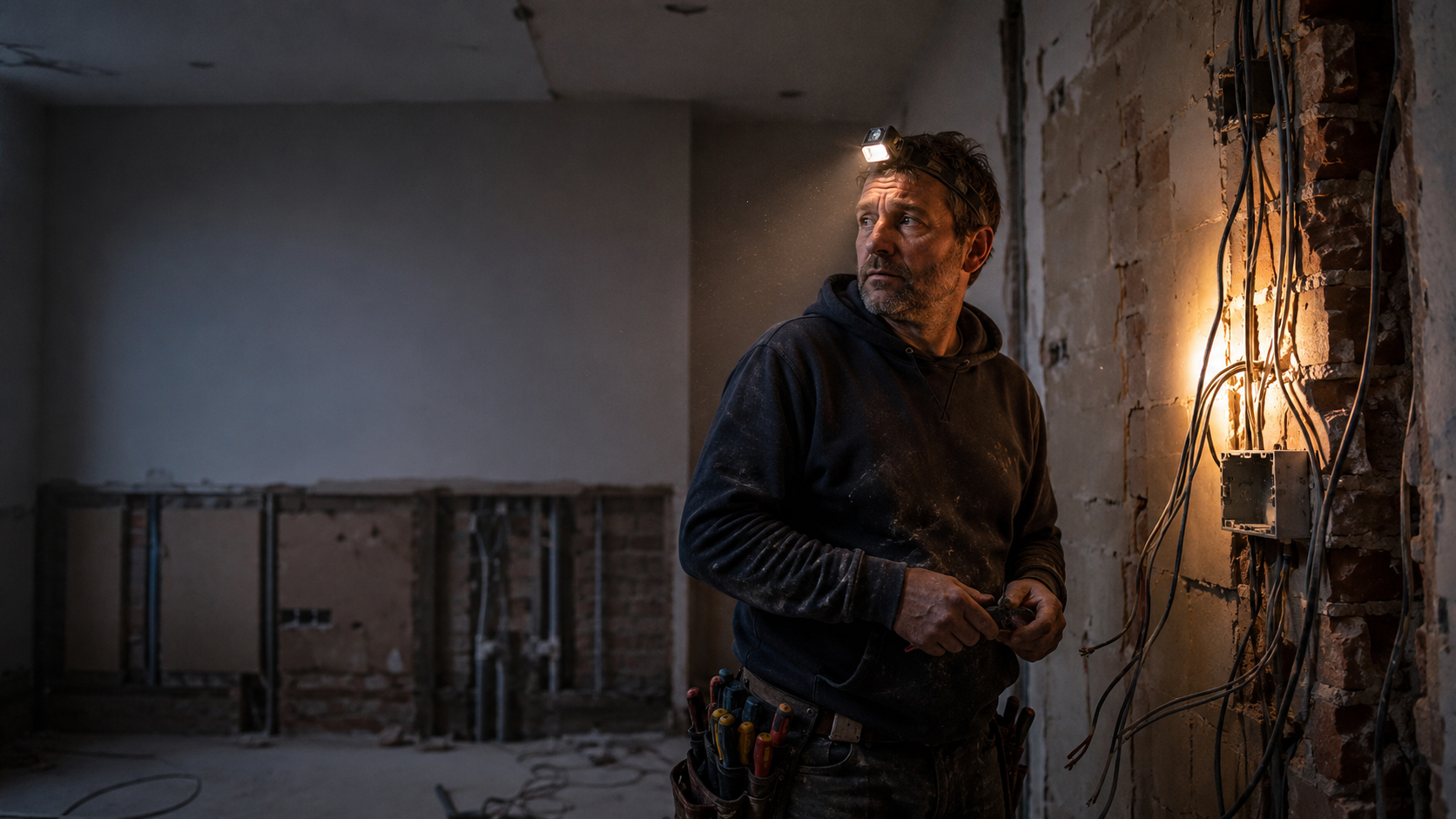
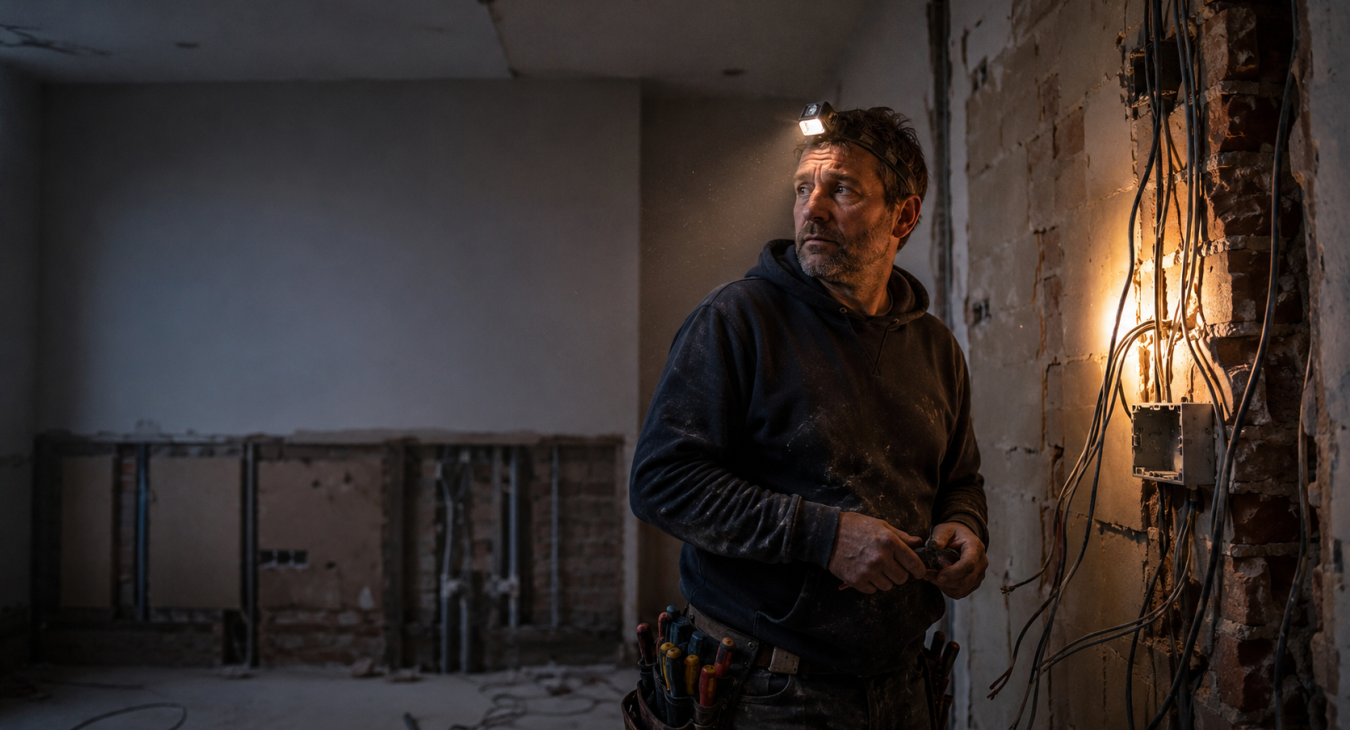
Ask an electrician to explain the stages of a rewire and he will talk you through it without even thinking. Chase the walls, run the cable, fit the back boxes, get everything tacked in and ready before the plasterer comes in. Come back once the walls are finished and connect the parts everyone actually sees, the switches, the sockets, the lights, the bit that makes a house feel like a home again. Ask the same man what's going on in his own head and he'll go quiet. Not because there's nothing going on but because nobody ever taught him how to do for his own mind.
This is why online counselling has become such a useful option for electricians specifically. It fits around a job that rarely gives you a fixed 9-5, and it means you're not sitting in a waiting room being seen by someone from the car park, that could turn up to be a customer.
What a house rewire can teach us about emotional healing
You can’t skip first fixing. You can't decorate a wall, fit a fancy chandelier and call the job done if the wiring is 100 years old and was never actually rewired. First fixing is the messy, disruptive stage, chased walls, dust everywhere, exposed joists, the house is a building site. This needs to happen before anything looks better, because it's the part nobody sees once the plaster is on.
Most men treat their own minds the opposite way round. They go straight to second fix. New job, new car, working harder, getting fitter, looking fine from the outside, while the actual fault is in the wiring. The grief, the resentment, that thing that happened years ago, never got chased out and replaced. It's still there, live, under a fresh coat of paint. In someone’s house is a fire hazard. In the mind of a man, it tends to come out as anger, short fused with the children, or a slow drift into drink and gambling that nobody quite notices until it spirals.
Where it shows up on site and at home
Electricians we often spend a big part of our day working alone. In the van between jobs with only company the radio with the only real conversation some days could be with a customer complaining why it takes so long. This solitude suits some men fine. For others it becomes the only place feelings actually surface, and the only place nobody's there to hear them.
Then he gets home and the switch doesn't turn. Sons who are used to dad being tired and quiet stop asking for his attention. A wife who can read an overloaded circuit in his mood long before he'd ever admit it. The same instinct that tells him a socket is gone just by looking at it doesn't seem to fire when it's aimed at his inner self. This doesn’t mean he’s damaged goods. It means no one ever taught him to look there.
The cost of decorating over old wiring
A circuit that's been overloaded for years doesn't fail quietly. It fails loudly, usually at the worst possible moment, exactly in the middle of cooking the Christmas roast. The same is true of a man who's been running on fumes for years and calling it fine. Alcohol or weed most nights becomes the fresh paint, it makes the evening look alright for a while, and it doesn't touch what's actually live underneath.
I have written before about how widespread this is across the trades industry, and how many tradesmen genuinely don't talk to anyone at all about what's going on for them. The strange irony with electricians is sitting underneath that stigma. We can say an installation is an accident waiting to happen and then ignore the same warning signs in our own life. As I have explored with men more broadly, it's rarely that men don't feel it. It's that nobody ever taught them where the fuse board for their own feelings actually is.
What counselling, like a rewire, actually involves
A good electrician doesn't guess. He tests, checks his cable runs are protected, makes sure everything's done properly before the walls get plastered, because covering a bad job in plaster doesn't fix it, it just hides it until it's more expensive and messier to sort it out. Counselling works the same way. The first few sessions can feel a bit like standing in a house with the walls chased and floors exposed, unfinished, not looking like progress yet. That's normal. That's first fix. It has to happen before anything looks or feels better.
The good news is the qualities that make a decent electrician, patience, methodical thinking, not guessing at a fault, not settling for a job that just looks fine, are exactly the qualities that make counselling work too. You're not starting from nothing. You're just running the same skill set on a different circuit.
Booking the counselling call
If any of this sounds like your Friday drive home, or the conversation you keep meaning to have with your partner but never start, you don't have to sort it out alone or wait until something actually fails. You can speak with a counsellor near you.
George Papachristodoulou
Frequently Asked Questions
Why do electricians struggle to talk about their mental health?
Trades work rewards fast, visible fixes done alone, so the slower, more exposed process of therapy can feel completely unfamiliar, almost like admitting a fault rather than starting a repair.
Is online counselling a good fit for electricians?
Yes, sessions can be booked around a job list, evenings or between call outs, so there's no lost paid time sitting in a waiting room.
Is it a sign of weakness for a tradesman to see a counsellor?
No, spotting a problem early and dealing with it properly is the same instinct that makes a good tradesman, catching a fault before it becomes more dangerous.
What if I can't explain what's actually wrong?
That's normal and it's usually where the work starts, you don't need a diagnosis ready before your first session.