Trigger warning: this blog discusses themes of suicide, depression, and survivor's guilt. If you're struggling, the Samaritans are available 24/7 on 116 123, UK only (free line).
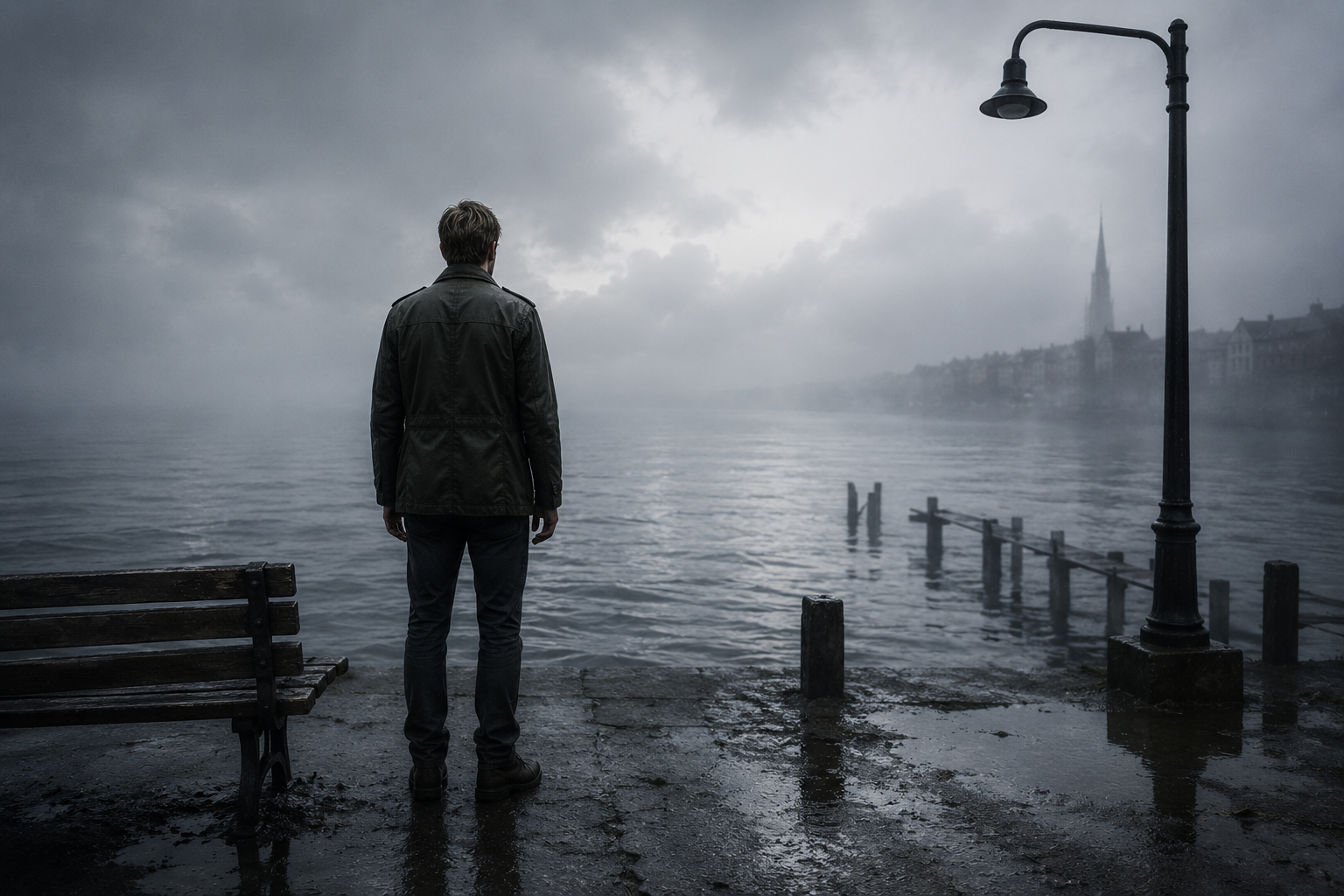
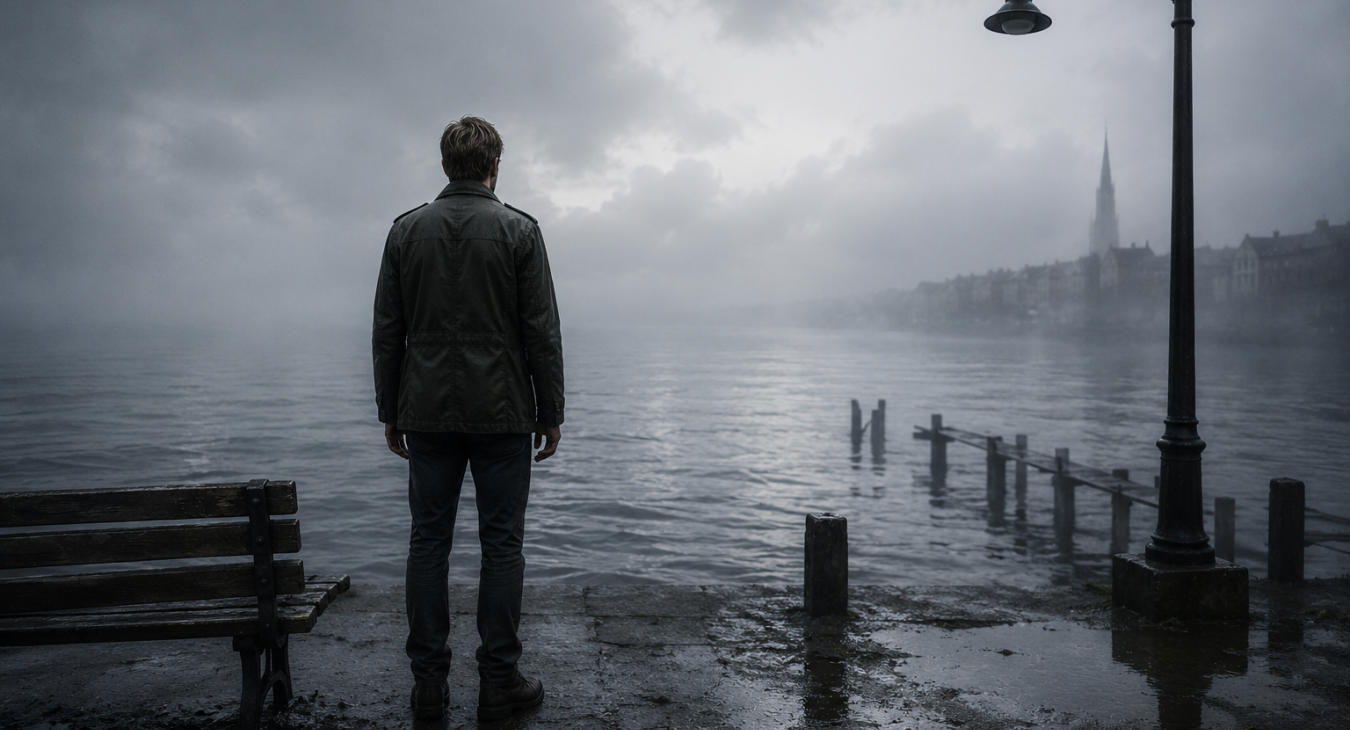
There's an instance at the end of Silent Hill 2 where James Sunderland drives his car into Toluca Lake. No dramatic speech. No final confrontation. Just a man, utterly haunted by guilt, choosing to disappear beneath the water.
If you got the In Water ending, you probably sat with it for a while. It doesn't feel like a game over. It feels like a tragedy.
And the hardest part? If you've ever been in a truly dark place yourself, a part of James's state of mind might have made a terrible kind of sense.
Silent Hill 2 In Water ending. The lie that feels like the truth
James doesn't drive into that lake because he's weak. He does it because his mind has convinced him, completely and utterly, that there is no other option. He has just remembered that he killed his wife. He's been wandering through a town that has literally manifested his guilt. Every corner of Silent Hill has been screaming at him that he is the worst thing that ever happened to her. And after long enough, he believes it.
That's the thing about despair. It doesn't always feel like despair. Sometime it can feel like clarity. It feels like you've finally seen the situation for what it actually is. The thought isn't, I want to die. It's, there is simply no reason to keep going. And this distinction matters, because the second version is much harder to argue with. James isn't looking for attention. He's not making a statement. He's just exhausted, and the water looks quiet.
What male depression really looks like and why men don't ask for help
We need to talk about men here, because this matters. James Sunderland is not a man who cries openly and asks for help. He's a man who puts one foot in front of the other, keeps moving, keeps pushing, keeps functioning, right up until he can't anymore. Sound familiar?
Male depression rarely looks like what we see in adverts. It's not always a man sitting alone in a dark room. More often it's the guy who's still showing up to work, still cracking jokes with his mates, still seeming fine from the outside. The mask stays on. That's the part that makes it so dangerous. Men are statistically far less likely to seek help for their mental health, and far more likely to die by suicide. In the UK, around three quarters of all suicide deaths are men. This number should stop us in our tracks every single time we hear it.
James never tells anyone what he's carrying. He wanders Silent Hill entirely alone, processing an unbearable weight with nobody beside him. This isolation isn't just a game mechanic. It's a portrait.
Survivor's guilt and the dangerous stories men tell themselves
At the heart of James's despair is survivor's guilt, the crushing sense that you are responsible for someone else's suffering or death, and that you don't deserve be here. It's a particular kind of pain that can follow men who have lost partners, friends, family members, or comrades. It distorts everything. It takes grief and twists it into self-punishment.
The mind under that kind of weight doesn't think straight. It can't. It starts to build a case against you, quietly, persistently, using every memory and every mistake as evidence. By the time James reaches that lake, he has been his own prosecutor for a very long time. The verdict was decided long before he got there.
This is what we mean when we say suicide is linked to distorted thinking. It's not a rational conclusion. It's the end result of a mind that has been telling itself a particular story for so long that the story feels like fact. The sense despair isn't the truth, it is a symptom.
What Silent Hill 2 is trying to say with the In Water ending?
Here's what Silent Hill 2 understands that a lot of media gets wrong. The In Water ending isn't presented as peace. It isn't framed as James finally finding rest or being reunited with Mary in some meaningful way. It's bleak. It's final. It's a man who needed help and never got it, making a permanent decision in the middle of the worst moment of his life.
The game gives you other endings. Ones where James chooses differently. Those endings aren't perfect either, but they contain something the In Water ending doesn't. They contain a next step. A tomorrow. A possibility that things might, in time, be different.
That's what getting help offers. Not a cure, not an instant fix, not the erasure of everything that happened. Just the possibility of a next step.
A few last thoughts
If any part of this blog sat a little too close to home, I want to talk to you directly for a second. The exhaustion James feels, the sense that the weight is too much, the quiet thought that things would be simpler if you just weren't here anymore, those feelings are real, and they are serious, but also they are not the full picture. Depression and grief can lie to you. They narrow your vision until all you can see is the water.
You don't have to have it all figured out to reach out. You don't have to be in a dramatic crisis moment. You just have to make one small move toward another person.
The Samaritans are available any time of day or night on 116 123, completely free, and you don't have to be on the edge of anything to call. CALM (Campaign Against Living Miserably) runs a helpline specifically for men on 0800 58 58 58, available from 5pm to midnight every day. You can also text SHOUT to 85258 for free, confidential support via text if talking out loud feels like too much right now.
James Sunderland drove into the lake because he was alone with his thoughts for far too long. You don't have to be.
Frequently Asked Questions
Does the In Water ending mean James is the villain of Silent Hill 2?
Not exactly. James did something terrible, and the town doesn't let him off the hook for it. But the In Water ending is less about punishment and more about what happens when a person never confronts what they've done and never gets any support. He's not a monster. He's a deeply broken man who needed help and he have never received it. That complexity is exactly what makes Silent Hill 2 such a powerful piece of storytelling.
Can video games actually help us understand mental health?
Absolutely. Games like Silent Hill 2 create a safe space to explore emotions and experiences that are difficult to talk about directly. When we see a character like James fall apart under the weight of guilt and depression, it can help players recognise similar patterns in themselves or people they care about. That recognition can be the first step toward seeking support.
I think someone I know might be struggling. What should I do?
The most important thing is to ask directly and without judgment. Asking someone if they're having thoughts of suicide does not plant the idea. Research consistently shows it opens a door. You don't need the perfect words. Saying, I've noticed you seem to be carrying something heavy lately, and I just want you to know I'm here, is enough to start. If you're genuinely worried about their immediate safety, stay with them and contact emergency services.
Where can men get mental health support in the UK?
The Samaritans are available 24/7 on 116 123. CALM runs a men's specific helpline on 0800 58 58 58 from 5pm to midnight daily. Mind offers mental health information and support. You can also visit your GP or ring 111/999 to discuss what you're experiencing.
Andys Men Club is a suicide prevention charity for men, running peer support groups every Monday. You can check if they run one in your area.